The Great Raid of 1863
1,000 Miles Behind Enemy Lines
In the summer of 1863, while the nation's attention was fixed on Gettysburg and Vicksburg, Confederate Brigadier General John Hunt Morgan launched one of the most audacious cavalry operations of the Civil War. With 2,460 handpicked cavalrymen and four artillery pieces, Morgan departed Sparta, Tennessee on June 11th with orders to raid Union-held Kentucky and disrupt supply lines.
Morgan had other plans. Defying his superior General Braxton Bragg's explicit orders not to cross the Ohio River, Morgan intended to carry the terror of war deep into the Northern heartland — through Indiana and across the breadth of Ohio.
Into Ohio
By early July, Morgan's raiders had crossed from Indiana into southwestern Ohio, burning railroad bridges, cutting telegraph lines, and seizing horses, food, and supplies from every town in their path. Governor David Tod called out the Ohio militia, but by then it was too late — Morgan's cavalry was moving faster than word could spread.
The raiders fought through skirmishes across the state, but their luck ran thin at the Battle of Buffington Island on July 18th, where Union forces and Navy gunboats caught them attempting to cross back into the South. Roughly 750 Confederates were captured. Morgan and his remaining 400 exhausted men broke through the Union lines and turned inland, riding northwest toward Nelsonville before veering northeast — still hoping to find a way across the Ohio River.
Mid-Morning in Nelsonville
On the morning of July 22, 1863, Nelsonville's storefronts and homes were decorated with Union flags — the town was still celebrating the victory at Gettysburg, which had ended just weeks before. The local militia had heard rumors that Athens was Morgan's next target, and had rushed thirteen miles south to defend it.
That left Nelsonville almost entirely undefended.
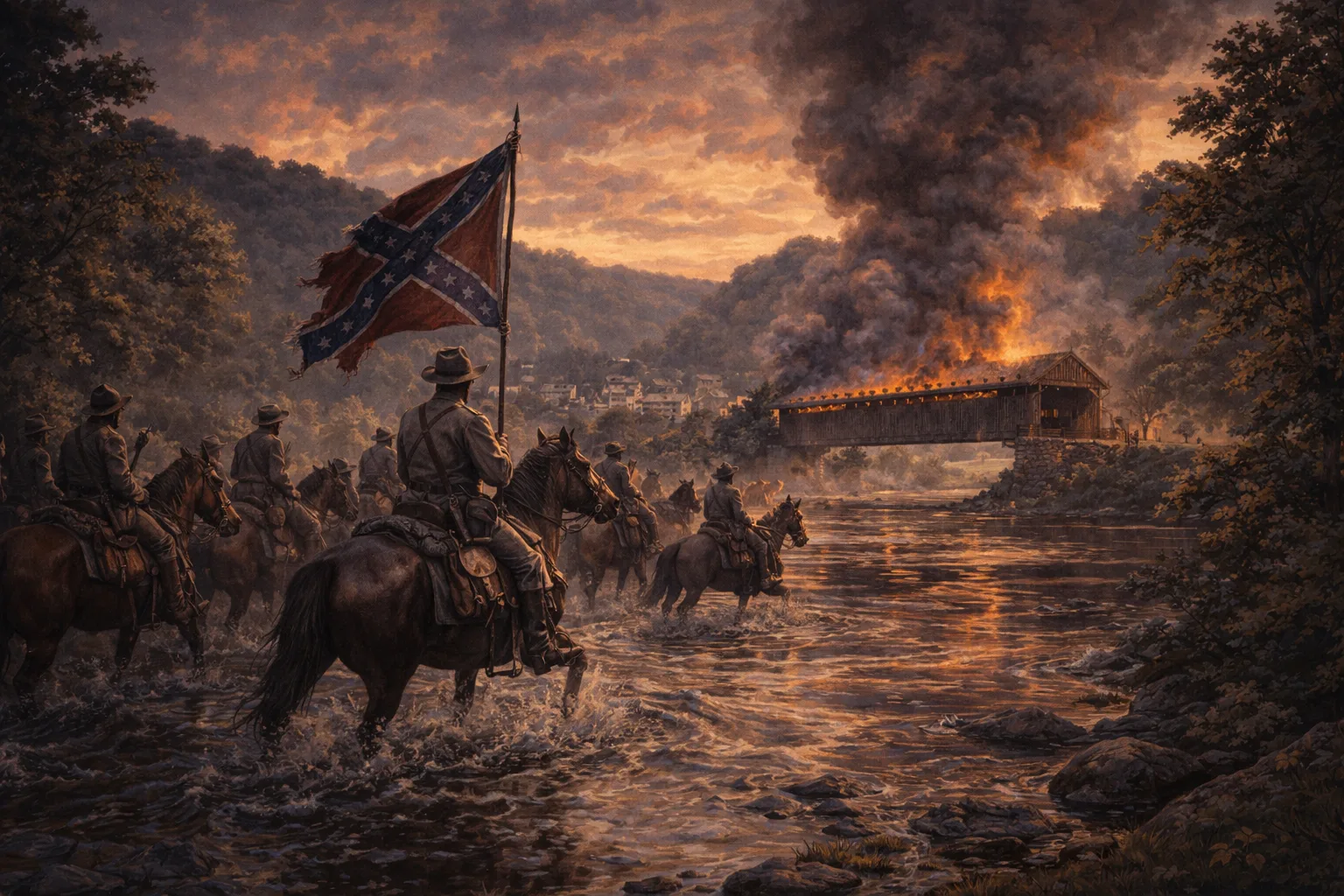
Around 10 a.m., Morgan's weary cavalry crossed the Hocking River and rode into the center of town, catching citizens completely off guard. The mayor surrendered immediately, hoping to spare the town from destruction.
Despite the mayor's plea, Morgan ordered the destruction to begin. His men set fire to ten canal boats docked along the Hocking Canal — and torched the covered bridge on the outskirts of town to slow the Union cavalry pursuing them. A coal yard adjacent to the canal also caught fire. The raiders helped themselves to food that families had prepared for their own tables, seized approximately 36 fresh horses, and stripped the town of every supply they could carry.
One small act of defiance survives in the record: a flour mill was spared destruction only because the owner's wife personally confronted General Morgan and begged him to leave it standing. He relented.
The Bridge Saved
The Confederates left Nelsonville in the early afternoon and headed northeast. But the moment Morgan's men rode out of sight, Nelsonville's citizens rushed to the burning covered bridge and extinguished the flames — saving the span and preserving the route for Union cavalry to continue their pursuit.
Hours later, Union forces under Brigadier General James Shackelford arrived in Nelsonville. They were delighted to find the bridge still standing — and that the townspeople had prepared a feast for them. The Athens Messenger would later note that the meal for the Union troops was given far more enthusiastically than the one the Confederates had taken for themselves.
The End of the Road
Morgan's raiders continued northeast through Perry, Morgan, and Muskingum Counties, fighting skirmishes in the streets of Old Washington and evading pursuit for four more days. On July 26, 1863, Morgan and his remaining 336 men finally surrendered near Salineville in Columbiana County — the farthest point north ever reached by any organized Confederate force during the entire war.
Morgan and his officers were imprisoned in the Ohio Penitentiary in Columbus, where their heads were shaved as a deliberate humiliation. Four months later, Morgan and six companions tunneled through a four-foot-thick stone wall, scaled the prison walls with a rope made from their uniforms, and escaped. Morgan returned to Confederate service but was killed less than a year later, on September 4, 1864, in Greenville, Tennessee.
The 46-day, 1,000-mile raid cost Ohio taxpayers nearly $600,000 in damages and over $200,000 in militia wages paid to 49,357 Ohioans called up to defend the state. Despite the military defeat, Morgan's second-in-command Colonel Basil Duke later wrote that the raid accomplished its strategic purpose — delaying the fall of East Tennessee and preventing reinforcement of Union forces before the Battle of Chickamauga.
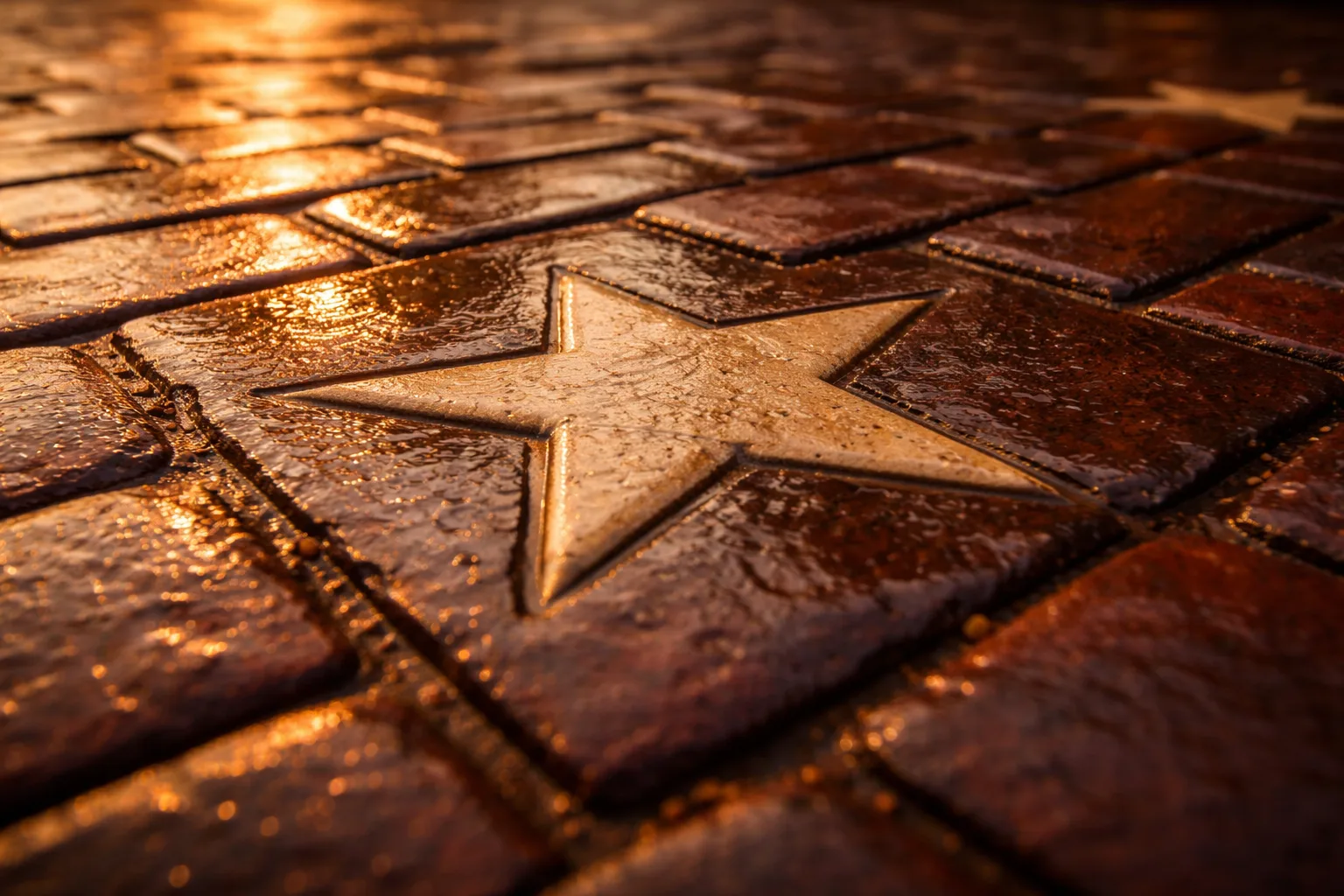
In Nelsonville, a historical marker now stands near the site where Morgan's men crossed the Hocking River. The star bricks still line the Public Square. The covered bridge is long gone — but it survived Morgan's raid, and that's the story Nelsonville tells.
← Back to Home